

Orthodontic concerns are common in both children and adults, and they can affect more than just the appearance of your smile. The way your teeth and jaws fit together plays an important role in chewing, speaking, and maintaining long-term oral health. The good news is that modern orthodontic treatments offer a range of effective options to correct these issues and support a healthier, more balanced smile.
In this article, we’ll walk through some of the most common orthodontic problems, what causes them, and how they are typically treated. Understanding your options can help you feel more confident when it’s time to take the next step.
What Causes Common Orthodontic Problems?
Orthodontic issues often develop due to a combination of genetic and environmental factors. Some people naturally have smaller jaws or larger teeth, which can lead to crowding or spacing concerns. Others may develop bite issues due to habits such as thumb sucking, prolonged pacifier use, or tongue thrusting during early childhood.
In some cases, orthodontic problems become more noticeable as children grow and their permanent teeth come in. That’s why early evaluations are often recommended. The American Association of Orthodontists (AAO) suggests that children receive an orthodontic check-up by age 7, which allows providers to identify concerns early and monitor development over time.
Crowded Teeth: Causes and Treatment Options
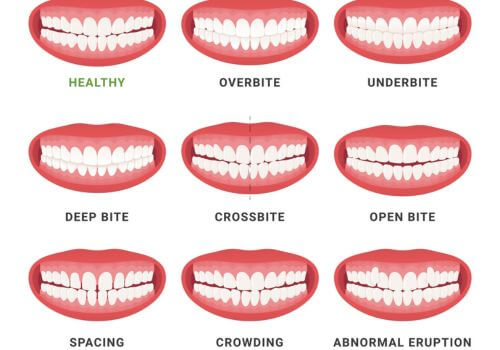
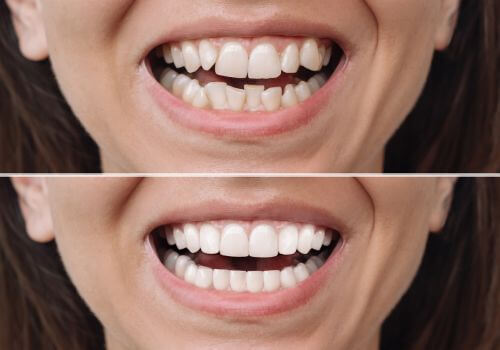
Crowding occurs when there isn’t enough space in the mouth for all teeth to align properly. This can cause teeth to overlap, twist, or become difficult to clean. When teeth are crowded, it may increase the risk of plaque buildup and make daily oral hygiene more challenging.
Treatment typically focuses on creating space and guiding teeth into better alignment. Options may include braces or clear aligners, which gradually shift teeth over time. In some situations, removing one or more teeth may be recommended to create enough room for proper alignment. Your dentist or orthodontist will evaluate your specific case before recommending the best approach.
Why Addressing Crowding Matters
Straightening crowded teeth can improve your smile’s appearance as well as your ability to brush and floss effectively. Better alignment can support long-term gum health and reduce areas where plaque tends to accumulate.
Overbite vs. Underbite: Understanding Bite Alignment
Bite issues occur when the upper and lower teeth do not meet correctly. Two of the most common types are overbite and underbite, each with its own set of considerations.
Overbite
An overbite happens when the upper front teeth overlap the lower front teeth more than expected. Mild overbites are common and don’t always cause problems, but more pronounced cases may contribute to uneven tooth wear or jaw discomfort over time.
Treatment may include braces, clear aligners, or specialized appliances that help guide jaw positioning, especially in younger patients whose jaws are still developing.
Underbite
An underbite occurs when the lower front teeth extend in front of the upper teeth. This can affect both function and facial balance. In growing patients, early orthodontic treatment may help guide jaw development.
For adults or more severe cases, a combination of orthodontics and jaw surgery may be recommended to correct the alignment and improve function.
Crossbite and Its Impact on Oral Health
A crossbite develops when some of the upper teeth sit inside the lower teeth instead of outside when biting down. This misalignment can affect a single tooth or multiple teeth and may occur in the front or back of the mouth.
Left untreated, a crossbite can contribute to uneven tooth wear, gum recession in certain areas, and strain on the jaw. Treatment options often include braces or clear aligners. In younger patients, a palatal expander may be used to gradually widen the upper jaw and create better alignment.
Early treatment is often beneficial because the jaw is still developing, making it easier to guide proper growth and prevent more complex issues later on.
Open Bite: When Teeth Don’t Meet Properly
An open bite occurs when the upper and lower front teeth do not touch when the mouth is closed. This can make it difficult to bite into foods and can also affect speech in some cases.
Open bites can develop due to habits such as thumb sucking or tongue thrusting, as well as underlying skeletal differences. Treatment depends on the cause and severity of the issue. Orthodontic appliances, including braces or aligners, are often used to gradually close the gap.
In more complex cases, especially when jaw structure plays a significant role, surgical treatment may be considered in combination with orthodontics to achieve a stable result.
Common Orthodontic Treatment Options
Modern orthodontics offers several effective solutions to address a wide range of alignment and bite concerns. Your treatment plan will be customized based on your needs, age, and overall oral health and may include:
- Traditional Braces: Metal or ceramic brackets bonded to the teeth and connected by wires that are adjusted over time to move teeth into position.
- Clear Aligners: Removable, nearly invisible trays that gradually shift teeth. These are often preferred for their convenience and appearance.
- Palatal Expanders: Devices used primarily in children to widen the upper jaw and create space for proper alignment.
- Retainers: Appliances worn after treatment to help maintain the new position of teeth and prevent relapse.
Each option has its own advantages, and your provider will help determine which approach best fits your situation and lifestyle.
When to See an Orthodontist
If you notice signs such as crowded teeth, difficulty biting or chewing, jaw discomfort, or visible misalignment, it may be time to schedule an orthodontic evaluation. Early assessment allows your provider to monitor growth and recommend treatment at the most appropriate time.
Orthodontic treatment is not just for children and teenagers. Many adults choose to improve their smile later in life for both cosmetic and functional reasons. Modern orthodontic advancements have made treatment options more discreet, efficient, and comfortable than in the past.
Correcting alignment issues can help improve oral health, support better bite function, and enhance overall confidence in your smile. With a personalized treatment plan, achieving a straighter, healthier smile is more attainable than ever.
If you have questions, we would love to answer them for you. Please give us a call at the office at (626) 570-1818, or you can email us at [email protected]. Our staff would love to talk with you!
Don't forget to follow us on social media Facebook, Instagram.