

Cosmetic dentistry offers a variety of solutions to enhance the appearance and functionality of your teeth. Two popular options are dental crowns and veneers, both of which can improve your smile, but serve vastly different purposes. For this reason, it’s important to understand the differences between dental crowns and veneers when your dentist recommends one option over the other.
What Are Dental Crowns?
A dental crown, also known as a cap, is a prosthetic that fully encases a damaged or decayed tooth above the gum line. Crowns are used to restore the tooth's shape, size, strength, and appearance, and are typically made from porcelain, ceramic, metal, or a combination of these materials.
Dental crowns can be used for various purposes, including:
- Restoring a severely decayed or damaged tooth that is too damaged for just a filling
- Protecting a weak tooth
- Covering a dental implant, providing a natural look and function
- Improving the appearance of a discolored or irregularly shaped tooth
- Anchoring a dental bridge
What Are Veneers?
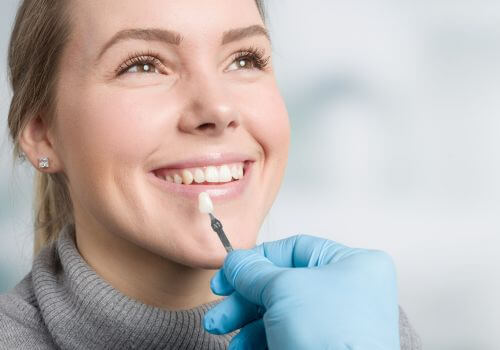
Veneers are thin, custom-made shells that cover the front surface of teeth to improve their appearance. They are usually made of porcelain or composite resin and are bonded to the front of the teeth. Veneers are primarily used for cosmetic purposes and are less invasive than crowns.
Veneers are typically used to address cosmetic issues, such as:
- Covering stains or discoloration that cannot be corrected with whitening treatments
- Rejuvenating worn-down teeth
- Repairing minor chips and cracks in teeth
- Creating the appearance of a more aligned and uniform smile
- Closing small gaps between teeth
Key Differences Between Crowns and Veneers
While both crowns and veneers can improve the appearance of your teeth, they have several key differences.
Coverage:
- Crowns cover the entire tooth, providing strength and protection to the underlying structure.
- Veneers cover only the front surface of the tooth, making them less invasive.
Purpose:
- Crowns are used to restore function and provide protection to damaged teeth.
- Veneers are used for cosmetic improvements to enhance the appearance of teeth.
Preparation:
- Crowns require more extensive preparation, including the removal of a significant portion of the tooth structure to accommodate the crown.
- Veneers require minimal tooth preparation, with only a thin layer of enamel being removed to fit the veneer.
When to Choose Crowns vs. Veneers
The decision between crowns and veneers depends on the condition of your teeth and your specific dental needs. Here are some scenarios where one option might be recommended over the other:
Choose Crowns If:
- You have a tooth that is severely decayed or damaged and needs significant restoration.
- You need to protect a weak tooth from further damage.
- You have a dental implant that needs to be covered.
- You require a durable solution for a tooth that has undergone root canal treatment.
Choose Veneers If:
- Your primary concern is cosmetic improvement, such as covering stains, chips, or minor misalignments.
- Your teeth are generally healthy, but you want to enhance their appearance.
- You prefer a less invasive procedure that preserves more of your natural tooth structure.
Longevity and Care for Crowns and Veneers

Both crowns and veneers are durable cosmetic dentistry options that can provide long lasting results when properly cared for. Dental crowns generally last 10 to 15 years or longer depending on the material used, oral hygiene habits, and regular dental care. Veneers also offer lasting results, with porcelain veneers commonly lasting 10 to 15 years and composite veneers typically lasting 5 to 7 years. Their lifespan can be influenced by daily habits such as teeth grinding, diet, and overall oral health maintenance.
Crowns and veneers each offer unique benefits for enhancing the appearance and strength of your smile. Learning how they differ can help you determine which treatment may be the right fit for your goals and dental needs. Contact our office to learn more about crowns, veneers, and which option may be best for your smile.